Essential Guide to Buying Kanchipuram sarees in India
Essential Guide to Buying Kanchipuram sarees in India
Silk Sarees from Kanchipuram, in the south
Indian state of Tamil Nadu, are among the finest sarees in India. As is to be
expected, there are a lot of fakes out there. Sometimes, it's not easy to spot
them either.
What Makes Kanchipuram
sarees Special?
Kanchipuram
sarees (also called Kanjivaram
sarees) are often referred to as south India's answer to north India's
Banarasi silk sarees from
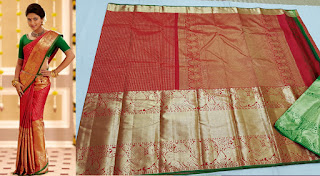
Varanasi. They're distinguished by their motifs, and heavy silk and gold cloth.
Due to their prestige, they're only worn on festivals and
other important occasions.
Silk weavers in Kanchipuram are believed to be descendants
of Sage Markanda, a master weaver who wove tissue from lotus fiber in Hindu
mythology. Due to the intricate nature
and complexity of the Kanchipuram
sarees, it takes between 10 days to a month to complete one.
Genuine, original
Kanchipuram sarees are woven using pure mulberry silk from neighboring
Karnataka and gold zari (thread) from Gujarat. Three silk threads are used in
the process, which gives the sarees their weight. A Kanchipuram sari can easily
weigh two kilograms, or more if a lot of zari is used! The bodies and borders are woven separately,
and then interlocked together making the joint so strong that the border won't
detach even if the sari tears.
Kanchipuram
sari borders are usually very different in color and design to the rest of
the sari.
All kinds of motifs are woven into their patterns, such as
suns, moons, chariots, peacocks, parrots, swans, lions, elephants, flowers, and
leaves.
Interested in how Kanchipuram sarees are made?
Breakaway offers a handicraft tour of Tamil Nadu looms that includes Kanchipuram.
Protection of Kanchipuram
sarees
Kanchipuram
sarees are protected under the Geographical Indications of Goods
(Registration and Protection) Act 1999.
Only 21 cooperative silk societies and 10 individual weavers
have been authorized to use the term. Any other merchants, including textile
mill owners in Chennai, who claim to be selling Kanchipuram silk sarees
can be fined or jailed.
If you're buying a Kanchipuram sari, make sure you
look out for the special GI tag that comes with authentic sarees.
Types of Kanchipuram
sarees
Nowadays, there are three types of sarees.
Pure silk
and pure zari. These are the original,
genuine Kanchipuram sarees with three silk threads used to weave them.
Prices start from around 6,500 rupees for a sari with a simple border.
Elaborate sarees can cost
40,000 rupees. The price may even reach 100,000 rupees.
Pure silk and textile/half-fine/tested zari. These types of sarees are very prevalent.
They're lightweight, have attractive colors and designs, and the price starts
from as low as 2,000 rupees. The drawback is that the zari may deteriorate and
turn black over time as it's not pure.
Polyester/silk mix and pure zari. These types of sarees look like the original Kanchipuram silk sarees but
weigh and cost less. The sarees
can also be made using pure silk
but only using a single thread (not three). Expect to pay around 3,000 rupees
upwards.
This means that when buying a Kanchipuram sari, you'll need
to be specific about the type you want. Don't just walk into a shop and ask for
a silk sari!
Where Should You Buy Kanchipuram sarees?
If possible, buy them in the place that they're made -- Kanchipuram. Located less than
two hours from Chennai, it can easily be visited on a side trip from Chennai.
As well as sarees, Kanchipuram is famous for its multitude of temple, so
there's plenty to see there!
Don't rely on guides or taxi and auto rickshaw drivers to
take you to sari shops, as they're likely to
suggest places that earn them commissions. There are many shops in
Kanchipuram selling fake silk sarees, so do your research beforehand!
Sarees are available from both government-run cooperative
silk societies (where the profits go directly to the weavers) and commercial
stores.
The best option depends on what type of sari you want.
Cooperative societies, most of which can be found along
Gandhi Road, sell genuine Kanchipuram sarees with pure silk and zari. The price
is higher and there's less variety to choose from. However, the quality is
guaranteed.
Commercial stores have a much wider range of designs but the
quality is not as good. These stores will mostly sell sarees that are not made
with pure zari. Of course, this is fine if it's what you're looking for! Just
be aware of the difference.
We will suggest Kanchipuram Sri Madheswaran silk Sarees shop
– Who is Started as Weaver Now Selling Kanchipuram Silk Sarees @ Wholesale
Price
Comments
Post a Comment